Due to their largely nocturnal habits, silent flight and large eyes, owls are traditionally regarded with a high level of suspicion by most Zimbabwean people.
These birds are generally associated with witchcraft and are believed to be familiars of witches and evil spirits who operate under the shadow of darkness. Although the twelve resident species vary considerably is size and habits, all are commonly regarded as harbingers of death or misfortune to some degree. Indeed, I found that this belief may be so entrenched that some people appeared decidedly uncomfortable or even evaded questioning on the subject of owls.
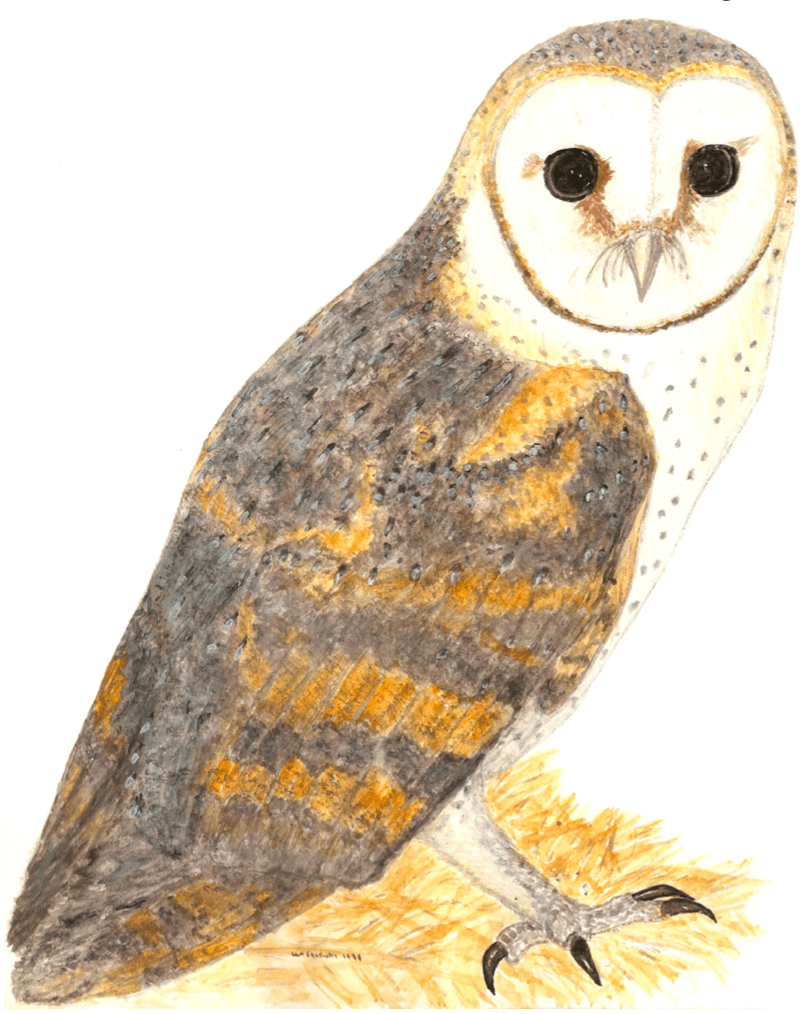
I was able to ascertain that the lower pitched hooting call of the Spotted Eagle-owl Bubo africanus or deep ‘grunt’ of a Verreaux’s Eagle-owl Bubo lacteus instills a deeper feeling of dread than the shrill screech of a Barn Owl Tyto alba (pictured) or the whistling call of the small (and partly diurnal) Pearl-spotted Owlet Glaucidium perlatum. Indeed, the persistent duetting of a pair of Spotted Eagle-owls near a homestead or village has even been known to cause residents to abandon their dwellings. Should an owl call from a perch on a roof, this is considered to be a particularly bad omen, possibly predicting the death of a family member of the occupant. In some instances the possibility of occurrence is prevented by placement of a spike on the apex of a hut, making it impossible for an owl to perch in that location.
It is also believed that should a Verreaux’s Eagle-owl swoop down and strike a traveller on the back of the head, that person may be doomed or will find a relative or friend dead or dying on their arrival home with no possible hope of reprieve. (This belief may have some basis in the fact that these owls may attack any intruder that ventures too close to a nest site).
The eyes of owls are used by some n’angas to make a concoction believed to heal failing eyesight. They may also be used in defensive spells, and for this reason the remains of these birds may occasionally be offered for sale in traditional markets, along with their eggs.
The general fear of owls persists, even in urban areas where they are unfortunately often persecuted by stoning.
Local names for the Verreaux’s Eagle-owl in Zimbabwe:
Chigunda – Shona (all dialects)
uMandukulu – Ndebele
Ligwitha – Venda/Sotho
Khuhunu – Shangaan
Chinchizya – baTonga
Local names for the Spotted Eagle-owl in Zimbabwe:
Jichidza, Chizizimbori – Shona (all dialects)
isiKhova, uMandukulu – Ndebele
Ligwitha – Venda/Sotho
Khuhunu – Shangaan
Kumbatamusamu – baTonga
Local names for owlets and Barn Owl in Zimbabwe:
Zizimagonjwa, uMandukulo, Zizi, Chipotono – Shona (all dialects)
uMundugulu, isiKhova – Ndebele
iGunda – Nambya
Leribisi, Makgolo – Sotho
Lerubisana, Nsoo, Madzukuya – Shangaan
Tumba, Chikova, Polo – baTonga
Information for this section on owls was obtained from contributors as well as Bozongwana (1983).
Reference:
Bozongwana, W. (1983). Ndebele religion and customs (1st ed.). Mambo Press, Gweru, Zimbabwe.
Similar beliefs to those discussed are shared throughout Africa, however some people do recognise owls as beneficial due to their effective control of agricultural pests. Their body parts are also widely used as a foundation for defensive spells, the heart being considered as particularly potent in Cameroon. The feathers may also sometimes be worn as a protecting amulet against witches that have assumed owl form, or owl familiars acting at their behest.
Additional References:
Cocker, M & Tipling, D. (2013). Birds and People, Jonathan Cape, London, England.
Mikkola, H. (2021). Owl Knowledge and Beliefs in Africa, Tyto : 9-33.
For more information on the species mentioned here visit:
https://ebird.org/species/veeowl1/TZ
http://datazone.birdlife.org/species/factsheet/verreauxs-eagle-owl-bubo-lacteus
https://ebird.org/species/spoeao2?siteLanguage=en_AU
http://datazone.birdlife.org/species/factsheet/spotted-eagle-owl-bubo-africanus
https://ebird.org/species/brnowl?siteLanguage=en_AU
http://datazone.birdlife.org/species/factsheet/common-barn-owl-tyto-alba
https://ebird.org/species/pesowl1
http://datazone.birdlife.org/species/factsheet/pearl-spotted-owlet-glaucidium-perlatum
 Birdlore