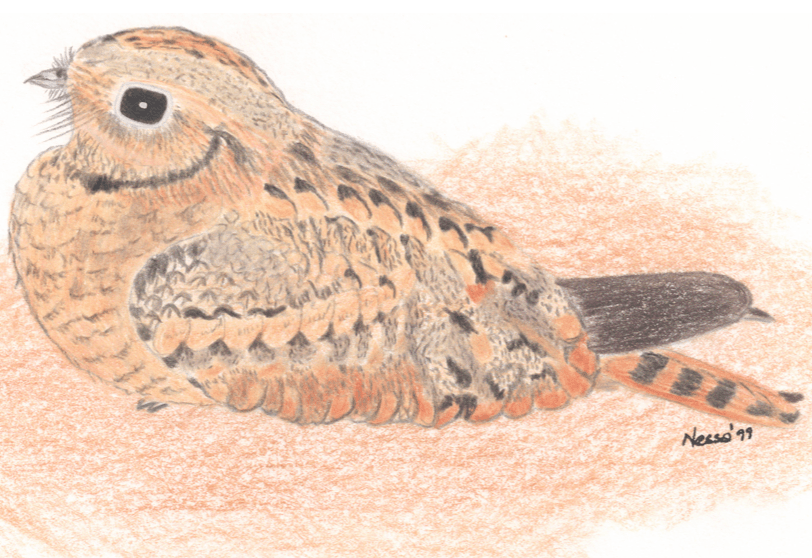
Nightjars are nocturnal insectivores that make use of their large gape to capture prey whilst on the wing. Of the six species that occur in Zimbabwe, most undertake some degree of seasonal or regional movement and are often encountered during the day when disturbed from ground roosts or nests where cryptic colouration prevents detection until they reluctantly take flight. The Mozambique Nightjar Caprimulgus fossii is pictured in a typical pose.
The increased frequency of calling becomes distinctly more noticeable prior to breeding during the wet season, and for this reason many Ndebele people believe that these birds herald the rainfall. However, due to their nocturnal aerial foraging and unobtrusive habits many also treat nightjars with suspicion and it is widely considered to be a bad omen should one of these birds settle on the ground near a homestead or village.
During interviews, people of Shangaan, Ndau and Venda origin related a common local belief that nightjars are particularly unintelligent. A person who continually makes mistakes is thus likened to one of these birds. Traditional practitioners are also said to make a powder from the ashes or eggs for a husband to mix in with the food of a ‘troublesome’ wife in order to make her ‘stupid’ and ensure her obedience.
Local names for nightjars in Zimbabwe:
Ndahwa, Dabgwa, Datiwa – Shona (all dialects)
iDahwa – Ndebele
Liwubawuba – Venda/Sotho
Libwatsani, Ribyatsani, Riwuvawuva – Shangaan
Lukumba – baTonga
Information for this section was obtained only from original interviews.
Additional reference to other sources for the rest of Africa revealed only a common Kenyan belief that bad luck will befall anyone who kills one of these birds or disturbs the eggs.
Additional Reference:
Cocker, M & Tipling, D. (2013). Birds and People, Jonathan Cape, London, England.
For more information on the species mentioned here visit:
https://ebird.org/species/sqtnig1
http://datazone.birdlife.org/species/factsheet/22690016
 Birdlore