Further Information – Birds in Zimbabwean Folklore

Birds featured thus far were those that I found to occur most commonly in Zimbabwean traditional beliefs and folklore. However a number of gaps still exist as only those that could be corroborated by at least three separate individuals were included in the original book text. Unless specifically mentioned, these have also been omitted in this blog.

Taxa dealt with in this post are those that I identified specifically during interviews with individuals of Shona origin, but for which I was unable to confirm from three individual sources. These (and some other taxa) warrant further investigation.

Cisticolas

Cisticolas are believed to be the king of birds by some Shona people, who substitute the Fork-tailed Drongo (Dicrurus adsimilis) with a cisticola in their version of popular orature. This tale tells of the drongo that won the title by having the presence of mind to ride on the back of an eagle (or vulture) in order to remain airborne for the longest period during a competition with a cisticola to determine who would be king.

This substitution of cisticolas for the drongo may be derived from the fact that most cisticola species remain relatively inconspicuous for most of the year, and are usually only seen and heard calling during decent from relatively lofty flight displays over their grassland breeding habitat. The Cloud Cisticola (Cisticola textrix) is a classical example in this regard. It also seems possible that this tale is derived from similar European beliefs surrounding the Winter Wren (Troglodytes troglodytes) as described in the book Birds and People.

Shona names for cisticolas – Timba, Dimba

For further information on the Cloud Cisticola visit:

https://ebird.org/species/clocis1

http://datazone.birdlife.org/species/factsheet/cloud-cisticola-cisticola-textrix

Additional Reference:

Cocker, M & Tipling, D. (2013). Birds and People, Jonathan Cape, London, England.

Pin-tailed Whydah

The Pin-tailed Whydah (Vidua macroura) is common in open habitats, including agricultural fields. During breeding, the adult male sports a long black tail, white underparts and bright reddish bill, while in non-breeding plumage, both male and female are substantially duller in appearance. The female remains relatively drab in all seasons, only changing bill colour during breeding. During the breeding season, males are particularly active and appear somewhat disruptive whilst in display to numerous females. A belief of some Shona is that the male is particularly vain and always attracts at least six females into his ‘harem’. The male thus is referred to as ‘the King of six’. In addition, the male is said to be ‘de-plumed’ by birds of prey following every breeding season to humble him. I was unable to adequately corroborate this, and it is also possible that this is derived from a similar tale historically told by people of Afrikaans origin, who name this bird ‘Koningrooibekkie’ or ‘King red-beak’.

Shona names for the Pin-tailed Whydah – Tsekedzamakaya, Tzidikidzamutsetse

For further information on this species visit:

https://ebird.org/species/pitwhy?siteLanguage=en_AU

http://datazone.birdlife.org/species/factsheet/22719988

Bee-eaters, Swallows, and Martins

The arrival of migratory bee-eaters, swallows, and martins from the north coincides with the spring and summer rains, and thus these birds were believed to herald precipitation by some individuals of Shona origin that I interviewed. While this seems perfectly plausible I was unable to corroborate this information from three independent sources, and thus did not include these taxa in the original text.

Shona name for bee-eaters – Gamanyuchi, Pfunyepfunye

Shona name for swallows and martins – Nyenganyenga, Mherepere

For further information on bee-eaters visit:

http://www.biodiversityexplorer.info/birds/meropidae/index.htm

For further information on swallows and martins visit:

http://www.biodiversityexplorer.info/birds/hirundinidae/index.htm

Calls of the Southern Red Bishop and Common Bulbul

The songs of the Southern Red Bishop (Euplectes orix) and the black-eyed Bulbul (Pycnonotus barbatus) were also mentioned as being harbingers of imminent rainfall, indicating that planting of crops should commence. Although I was unable to adequately corroborate the importance of the call for both taxa, the Red Bishop seems plausible as it does share similar nest building attributes with the related weavers, being particularly active in this regard prior to the rains. The reason as to why the bulbul is included in this category seem less clear, as they actively call year round. I concluded that this may be the result of confusion between taxa.

Shona names for the Southern Red Bishop – Chikenya, Nyamafuro

Shona name for the Common Bulbul – Chigwenhure

For further information on the Southern Red Bishop visit:

https://ebird.org/species/redbis/

http://datazone.birdlife.org/species/factsheet/22719186

For further information on the Common Bulbul visit:

https://ebird.org/species/combul2?siteLanguage=en_AU

http://datazone.birdlife.org/species/factsheet/7187

In further posts I will cover bird names listed for all Zimbabwean taxa in alphabetical order.
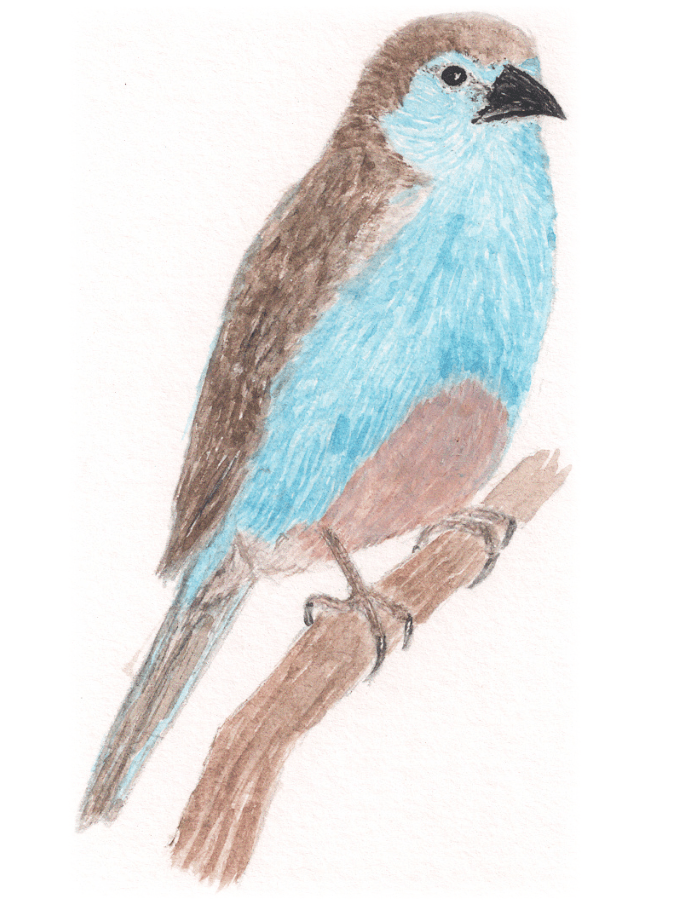
The Blue Waxbill in Zimbabwean Folklore

The Blue Waxbill (or Blue-breasted Cordon-bleu) Uraeginthus angolensis is a small seed-eating bird which frequents thorny scrub and forest edges and is often found near human habitation. Their untidy grass nests are usually situated deep within a thorny bush, often situated in close proximity to wasps, possibly as an added means of protection. Females are similar in appearance to males but are duller in colouration.

Being a common and familiar species, it is perhaps unsurprising that this bird at least features in the folklore of the Ndebele, who believe that should one of these birds land on an individual’s head, this would most certainly serve as a warning from the spirits of impending personal disaster.

Local names for the Blue Waxbill in Zimbabwe:

Kasisi – Shona (all dialects)
uNtinti, uGcigciyane – Ndebele
Xidzingirhi – Shangaan

Information for this section was obtained only from contributors.

For more information on this species visit:

https://ebird.org/species/bubcor1?siteLanguage=en_AU

http://datazone.birdlife.org/species/factsheet/8639

Bishops, Weavers and Quelea in Zimbabwean Folklore

The gregarious nature, colours, and nest-building prowess of the bishops, weavers and quelea have attracted the particular attention of Ndebele and Kalanga tribespeople. Indeed, it is commonly believed to be a good omen if any of the weaver species choose to build their basket-like nests in colonies nearby or above a homestead or kraal. This occurrence is said to be a sign of enduring peace and unity to the home, however none of these nests should be disturbed, as this would almost certainly result in future discord.

It is also believed that these birds possess the ability to predict good rains, and should any of the taxa mentioned build a large number of nests in a single locality, an excellent rainy season will follow. In addition, floods should be expected if a number of weaver nests are located exceptionally high up in a tree above a river.

While the Ndebele do not generally differentiate between the bishops, quelea and weavers (grouping all as iNthaka), in some areas they do have specific names for some weaver taxa. The Shona and some smaller tribes do qualify quelea and bishops as distinct from the weavers and the baTonga alone name the male and female (along with non-breeding males) separately. Flocks of quelea are however named only as a large single entity by the Ndebele, who believe that n’angas purposefully employ sparrowhawks to disperse these large flocks (umDumanyoni), which may otherwise decimate grain crops and result in a poor harvest.

Local names for weavers in Zimbabwe:

Jesa, Muguobhani – Shona (all dialects)
iNthaka – Ndebele
Manchoo – baTonga

Local names for quelea and/or bishops in Zimbabwe:

Nyamafuro (bishop), Ngoza, Chimokoto (quelea) – Shona (all dialects)
Chifada (bishop), Kandonga (quelea) – Nambya
Tingozi (quelea) – Shangaan
(bishop male) Chamsankanana / (bishop female) Tuyonimbile – baTonga
umUndumo, umDumanyoni (quelea flock) – Ndebele

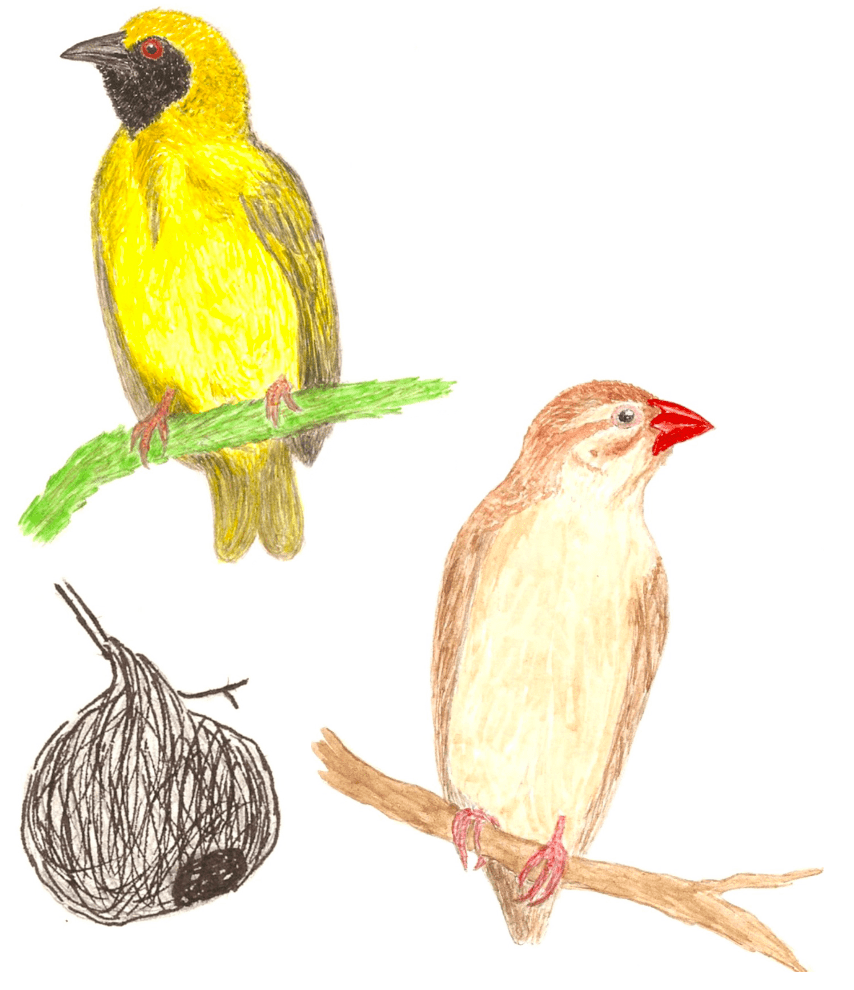
A Southern Masked Weaver Ploceus velatus breeding male, is pictured below left with typical nest and a Red-billed Quelea quelea non-breeding male (or female) is pictured below right.

Information for this section was obtained only from contributors.

For more information on the species depicted visit:

https://ebird.org/species/afmwea/

http://datazone.birdlife.org/species/factsheet/8522

https://ebird.org/species/rebque1/

http://datazone.birdlife.org/species/factsheet/red-billed-quelea-quelea-quelea

Glossy Starlings in Zimbabwean Folklore

Glossy Starlings are generally gregarious birds with a distinct sheen to their plumage, particularly when exposed to direct sunlight. There are seven species in Zimbabwe, which feed on fruit, invertebrates and seeds, making use of existing nesting hollows in the summer months.

During interviews some Karanga and Korekore people related their belief that night witches employ these birds as familiars and use them to light their way during the hours of darkness. A slight variation on this theme is the Ndebele belief that witches place the iridescent feathers in their pockets for the same reason.

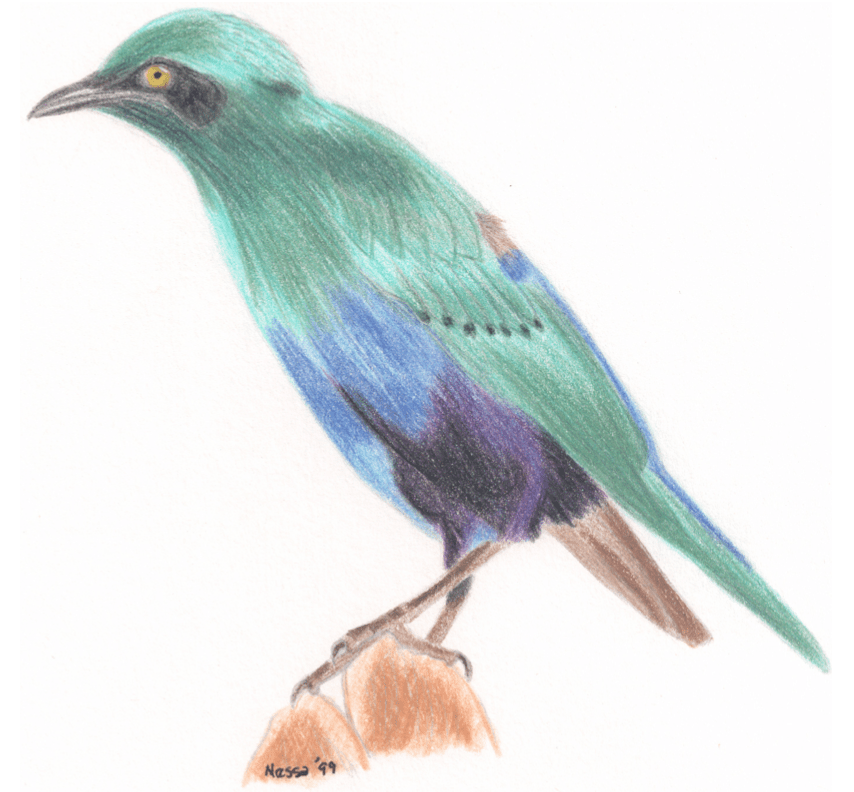
Many people expressed a particular dislike for these birds due to their perceived association with witches, however some Manyika interviewees shared the opposite belief that it is in fact good luck to see one. They also informed me that the ‘nasal’ call of the Greater Blue-eared Starling Lamprotornis chalybaeus (pictured) forewarns a traveller of impending danger on the path ahead.

Local names for Glossy Starlings in Zimbabwe:

Hwidzikwidzi, Hwidzikuyozi, Svigonde – Shona (all dialects)
iKwezi – Ndebele
iMpiye – Nambya
Hudzululu – Kalanga
Liholi, Legodi – Venda/Sotho
Khwezu, Kholowane – Shangaan

Information for this section was obtained only from contributors.

For more information on the species mentioned here visit:

https://ebird.org/species/gbesta1/

http://datazone.birdlife.org/species/factsheet/greater-blue-eared-starling-lamprotornis-chalybaeus

The White-crested Helmetshrike in Zimbabwean Folklore

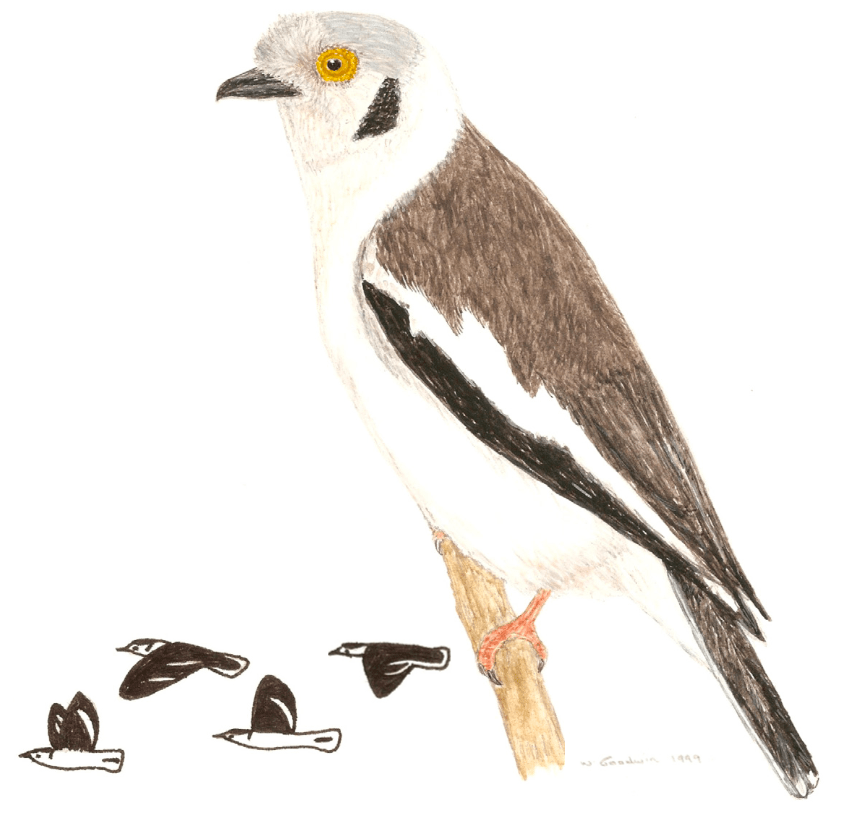
White-crested Helmetshrikes Prionops plumatus are sociable birds, usually frequenting the understorey where they spend much of the day moving from place to place while foraging. Unlike the babblers they are relatively quiet, usually communicating via a low-pitched clicking call. Whilst in flight their prominent black and white wings are a distinguishing feature.

This species appears to be a bird of mixed omens in Zimbabwean folklore. A relatively common belief relayed to me by a number of people of Zezuru and Karanga origin is that a flock flying through, or near to a village is a particularly bad omen, possibly foretelling the death of a close relative. Contrary to this, most other people that I interviewed generally considered this a good and gentle species, representing good luck if encountered. This ‘luck’ would most likely be received in the form of meat, and indeed the various local names can be loosely translated as ‘the bird that follows the hunters’ or ‘the provider of meat’. This belief may be derived from their habit of following various animals in order to hawk insects stirred up by their movement.

Another common Shona belief is that a flock is invariably comprised of seven individuals. As such these birds are often referred to as ‘the seven sisters’ (although one cannot easily differentiate between the sexes and flocks do not always consist of seven individuals). The origins of this belief are a little obscure, however they may somehow be derived from similar folklore related to sociable babbler species in India. In common with the local babbler species mentioned in the previous post, some Ndau, Venda and Sotho people also informed me that if a flock is seen near one’s home, visitors should soon be expected.

Local names for the White-crested Helmetshrike in Zimbabwe:

Chiteveravadzimba, Mashoranyama, Shavishavi, Mariyani – Shona (all dialects)
iHolanyama – Ndebele
iLungwalungwa – Nambya
Masula-bayeni – Venda/Sotho
Mpongo zyathengwe, Dungulungwa – baTonga

Information for this section was obtained only from contributors.

Additional Reference:

Cocker, M & Tipling, D. (2013). Birds and People, Jonathan Cape, London, England.

For more information on this species visit:

https://ebird.org/species/whihel1/KE

http://datazone.birdlife.org/species/factsheet/6200

Babblers in Zimbabwean Folklore

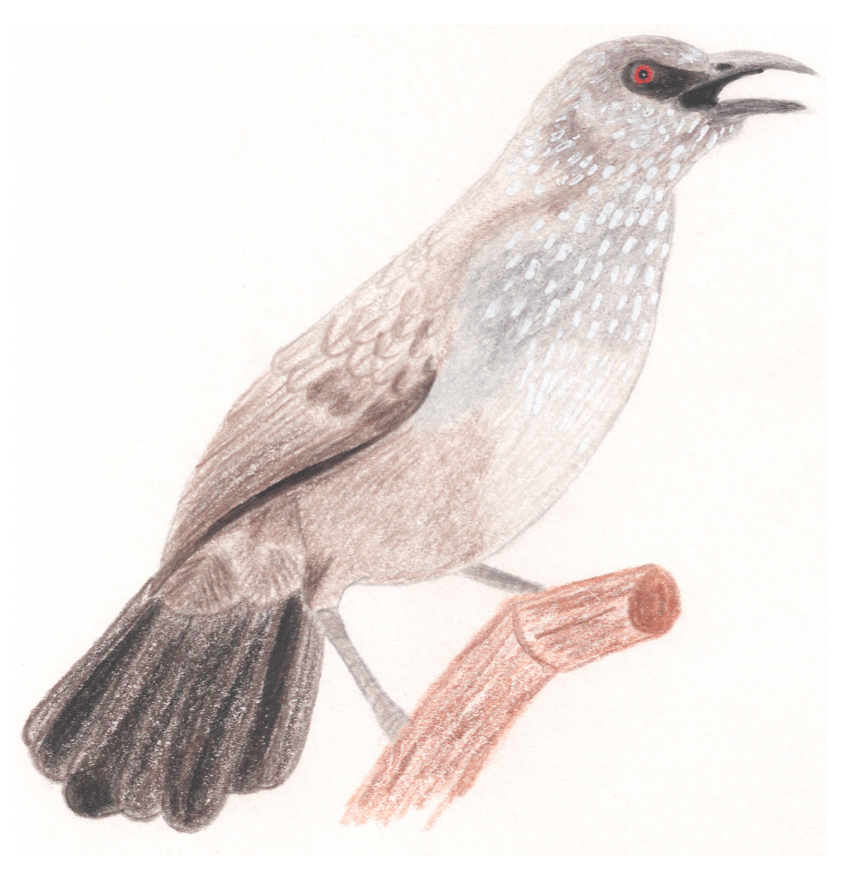
The Arrow-marked Babbler Turdoides jardenii (pictured) and Southern Pied Babbler Turdoides bicolor are sociable species that usually frequent the understorey. Here they spend most of the day noisily moving from place to place while foraging amongst leaf litter for a variety of food items including insects, grubs and small reptiles.

Babblers are named for their raucous communication calls that are reminiscent of hysterical laughter. As they often become bold and venture close to human habitation it is unsurprising that they should feature in local folklore. Indeed, a number of baTonga and Shangaan interviewees related a common belief that a flock of babblers near a homestead foretells the imminent arrival of a visitor.

Local names for babblers in Zimbabwe:

Hochachocha, Dywedywe, Zhongozho – Shona (all dialects)
iDlakadlaka – Ndebele
Chikwalukutaru – Nambya
Ngayakaya, Mayokoyokwani – Shangaan
Dhele – baTonga

Information for this section was obtained only from contributors.

For more information on the species mentioned here visit:

https://ebird.org/species/armbab1/UG-N

http://datazone.birdlife.org/species/factsheet/7973

https://ebird.org/species/sopbab1/

http://datazone.birdlife.org/species/factsheet/southern-pied-babbler-turdoides-bicolor

The Pied Crow in Zimbabwean Folklore

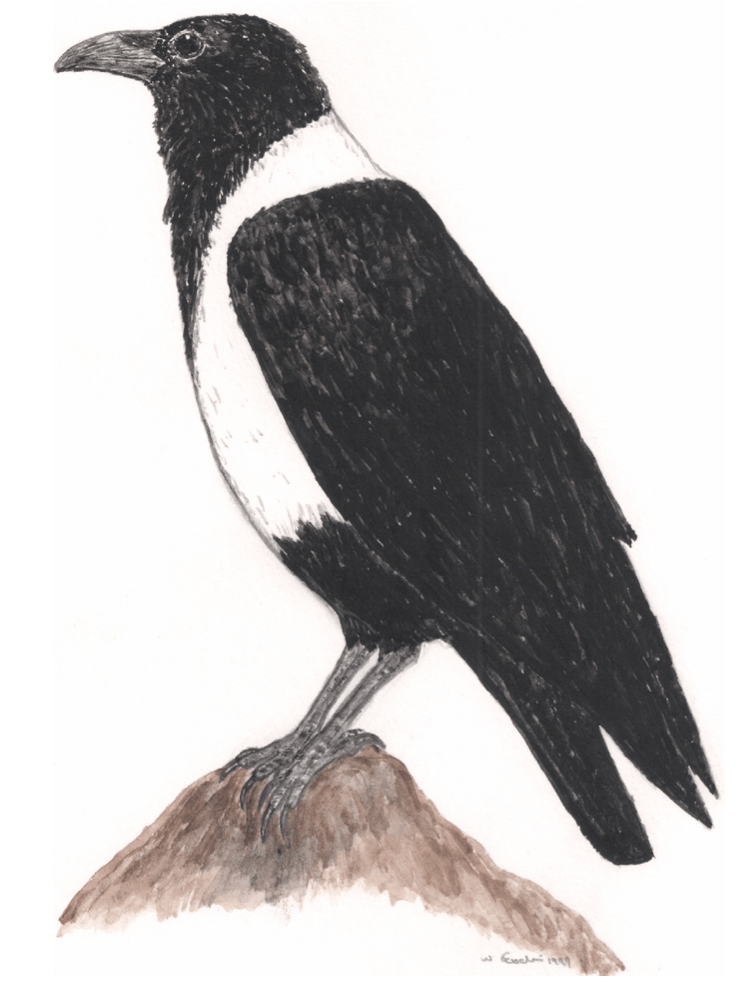
The Pied Crow Corvus albus is one of three corvids found in Zimbabwe, however I found that only this well known species features in local folklore, particularly relating to their apparent intelligence, ‘priest-like’ pied plumage and penchant for feeding on carrion.

A belief related to me by some Ndau contributors is that Pied Crows lack blood in their bodies, and that although they originated from the heavens, they cannot now return due to their carrion eating habits. For this reason these birds are never eaten. I was also informed of the Shangaan belief that should a person eat food stored by a Pied Crow they would almost certainly lose their memory.

Ndebele people interviewed corroborated the belief that rain clouds disperse when crow chicks open their beaks, and that as a result, their nests are destroyed whenever possible. Contrary to this, a number of people of Shona origin told me of the common belief that no rain will fall during the upcoming wet season should one of these birds be killed for any reason.

I was also informed that the baTonga consider Pied Crows as ‘protectors’ that watch over other birds.

Local names for the Pied Crow in Zimbabwe:

Gunguwo, Sawara – Shona (all dialects)
iWabayi – Ndebele
Legokobu – Sotho
Gunguvo, Gwavava – Shangaan
Chikwangia – baTonga

Information for this section was obtained from interviews with contributors, as well as the reference below.

Reference:

Bozongwana, W. (1983). Ndebele religion and customs (1st ed.). Mambo Press, Gweru, Zimbabwe.

For more information on this species visit:

https://ebird.org/species/piecro1?siteLanguage=en_AU

http://datazone.birdlife.org/species/factsheet/pied-crow-corvus-albus

The Fork-tailed Drongo in Zimbabwean Folklore

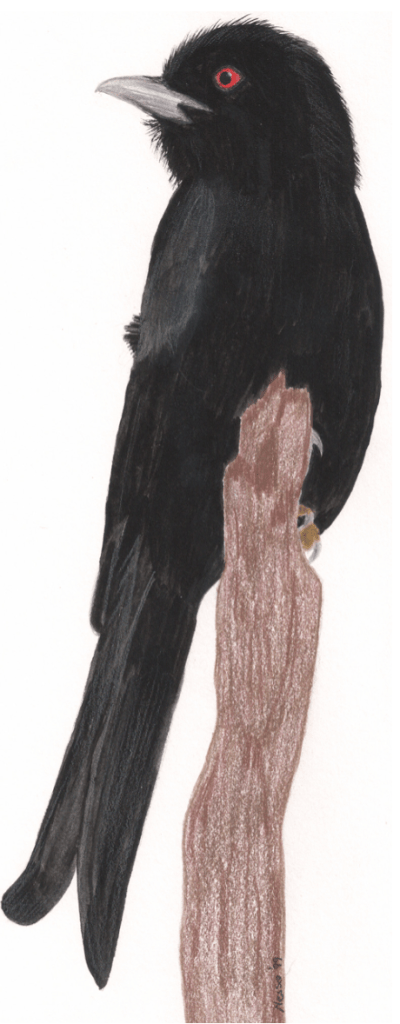
The Fork-tailed Drongo Dicrurus adsimilis is a ‘spirited’ bird and accomplished mimic, which shows little apparent fear, often being the first bird to raise the alarm in the face of perceived danger.

This bird readily attacks intruders near the nest site and regularly mobs and harasses large birds of prey, even alighting on their backs in flight. This behaviour has led the Shangaan to believe that this drongo is the true king of all birds. One oft-related tale tells of the drongo that earned this title by having the presence of mind to ride on the back of a Bateleur Eagle in order to remain airborne for the longest period during a competition with a cisticola to determine who would be the avian king.

Drongo’s hawk insects from suitable perches and are often attracted to bush fires, or follow animal herds which disturb insects from the undergrowth. The latter behaviour has lead to the belief that this bird is an overseer and herder of livestock.

Due to this close association with animals it is said to be the first bird to rise in the morning in order to oversee its subjects and warn them of impending danger. This behaviour, black plumage and red eyes have attracted the attention of local tribespeople, and indeed it is believed that this species is highly intelligent, forceful and dominant. It is thus closely associated with the spirit mediums.

Local names for the Fork-tailed Drongo in Zimbabwe:

Nhengure, Nengu, Tengu – Shona (all dialects)
uMantengwane – Ndebele/Shangaan/Nambya
Theku – Venda/Sotho
Tengwe – baTonga

Information for this section was obtained only from contributors.

For more information on this species visit:

https://ebird.org/species/fotdro5?siteLanguage=en_AU

http://datazone.birdlife.org/species/factsheet/fork-tailed-drongo-dicrurus-adsimilis

Woodpeckers in Zimbabwean Folklore

Woodpeckers are well known for their habit of bill tapping on tree trunks or branches, either in search of invertebrates, or for nest hole construction. The six species that occur in Zimbabwe are all generally considered as important messengers by local people.

A number of Manyika and baTonga people interviewed told me of their belief that the these birds tap in search of honey and that by following the sound, one will be led to a beehive.

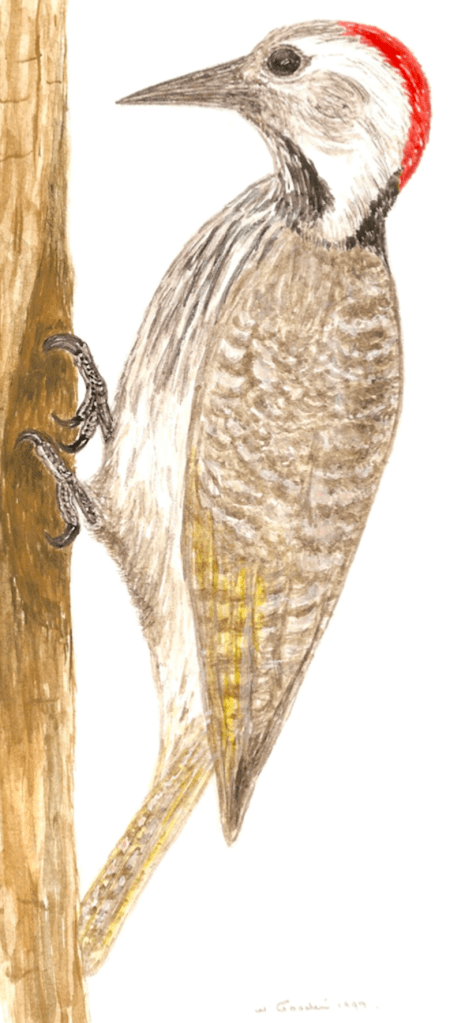
Many Ndebele and Kalanga people also interpret this tapping near the home as a signal that visitors will soon be received. Likewise, the loud nasal call of a Golden-tailed Woodpecker Campethera abingoni (pictured) is thought by some Ndebele people to herald visitors, however some Nambya believe that tapping near the home is actually a warning of impending danger.

Local names for woodpeckers in Zimbabwe:

Chigogodza, Chiohodza, Kwadzantonda, Chinyamugogoja – Shona (all dialects)
isiQoqodo – Ndebele
isiMugogomena – Nambya
Gogonya, Mutanoa – Venda/Sotho
Chigongonjongonzwani – Shangaan
Chimagogo – baTonga

Information for this section was obtained only from interviews with contributors.

For more information on the species mentioned here visit:

https://ebird.org/species/gotwoo1/

http://datazone.birdlife.org/species/factsheet/22680902

The Greater Honeyguide in Zimbabwean Folklore

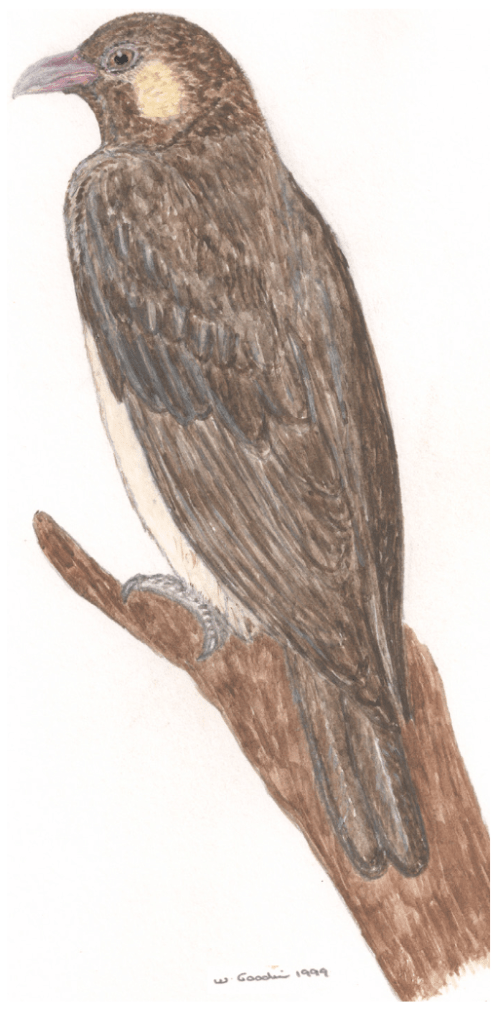
The Greater Honeyguide Indicator indicator is well respected in Zimbabwean folklore and I found it familiar to most people interviewed.

This species regularly attracts people (and possibly honey badgers) to beehives by uttering an excited chattering call, which can be likened to that of an excited squirrel. By following this bird one may be led to a hive full of honey. As the bird feeds largely on bee larvae and beeswax, but has no physical means of acquiring these, it must rely on such a symbiotic relationship to access honeycombs. Surrounding this is the ubiquitous belief that ‘fair play’ must be observed and that bad luck will befall a person who is guided to a hive, but fails to leave a portion of the spoils for the bird. It is also believed by some that if one chooses to follow a honeyguide, it is a ‘game of chance’ as the bird may lead a person to honey, or conversely to a dangerous animal such as a snake or lion. A variation on this belief, related to me by people of both Manyika and Shangaan origin, is that the bird could possibly also lead one to the locality of a human corpse.

Local names for the Greater Honeyguide in Zimbabwe:

Shezhu, Mukaranga, Tsoro, Tsare – Shona (All dialects)
iNsedlu, iMlezu – Ndebele/Kalanga
Tshetlo – Venda/Sotho
Hlalala – Shangaan
Nsolo – baTonga

Information for this section was obtained from interviews with contributors as well as various other popular sources.

Similar beliefs surrounding the Greater Honeyguide are shared across Southern and East Africa.

Additional Reference:

Cocker, M & Tipling, D. (2013). Birds and People, Jonathan Cape, London, England.

For more information on this species visit:

https://ebird.org/species/grehon2

http://datazone.birdlife.org/species/factsheet/22680616