Due to its stately appearance and unusual haunting call, the Grey Crowned Crane Balearica regulorum is perceived as a dominant bird, widely associated with power and royalty by the Ndebele people.
Although these birds may cause crop damage by feeding on newly planted seeds and young shoots, they are not generally harmed, as it is believed that to do so would certainly bring bad luck. Their presence is said to signify that all is well in the lands, and indeed many who live alongside this species welcome their courtship ‘dances’ during the early summer months.
As with other crane species in Africa, these birds are becoming increasingly vulnerable due to habitat destruction, poisoning and collision with power lines.
Local names for the Grey Crowned Crane in Zimbabwe:
Horiori, Hororo – Shona (all dialects)
iHemu, inGalukhumi yeyanga, Horowana – Ndebele
Nyakukolwe – Shangaan
Wawali – baTonga
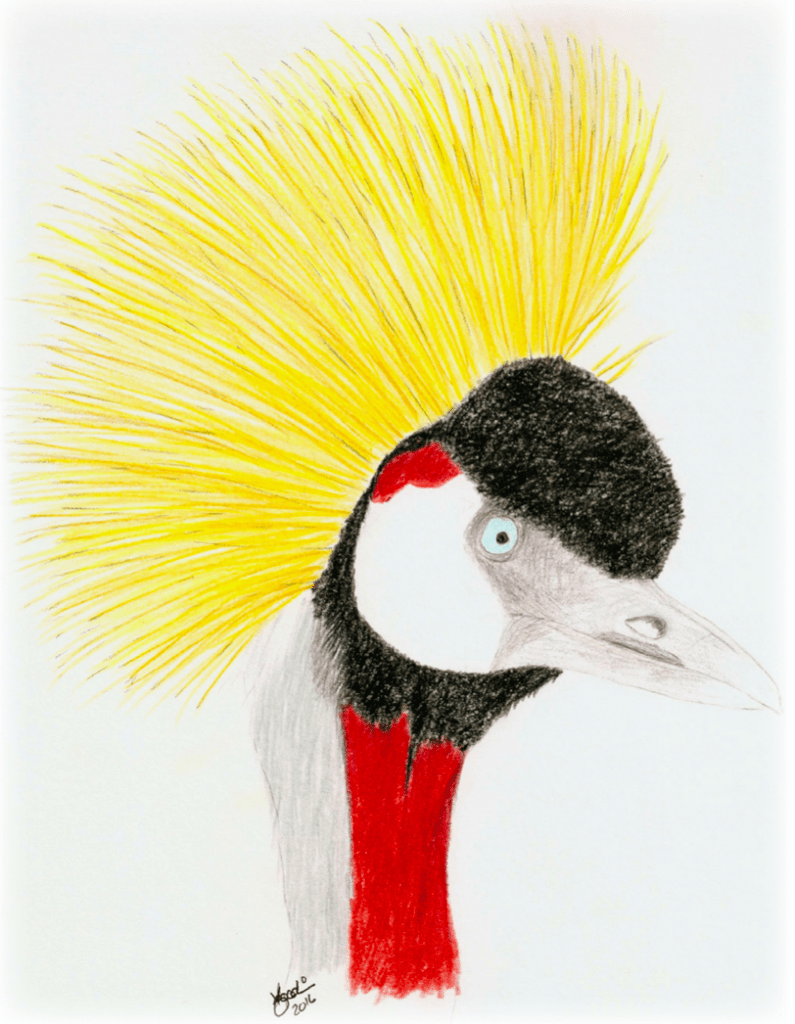
Information on the Grey Crowned Crane was obtained only from personal interviews with contributors.
While the Blue Crane Anthropoides paradiseus does not occur in Zimbabwe it is near-endemic to South Africa, where the Xhosa and Zulu peoples once regarded it as a symbol of masculine power. Indeed, the plumes of this species were awarded to senior leaders and warriors as recognition of prowess in battle.
Additional Reference:
Cocker, M & Tipling, D. (2013). Birds and People, Jonathan Cape, London, England.
For more information on the two species covered here visit:
https://ebird.org/species/grccra1?siteLanguage=en_AU
http://datazone.birdlife.org/species/factsheet/grey-crowned-crane-balearica-regulorum
https://ebird.org/species/blucra2
http://datazone.birdlife.org/species/factsheet/blue-crane-anthropoides-paradiseus
 Birdlore