Below are Zimbabwean names for birds corresponding with those that begin with the letter ‘H’ in the English vernacular. These local bird names were obtained from personal communication with contributors, as well as reference to lists contained in Cooke (1970) and Maclean (1985). These are not exhaustive and may be subject to minor errors.
Links to further information pertaining to each group or taxa are included.
Hamerkop
Kondo – Shona (all dialects)
uThekwane – Ndebele
Sikabenge – Nambya
Masiyenuka – Venda/Sotho
Nyakhonzo; Ngondzwe; Mandonzwana – Shangaan/Tsonga
Lukonzo – baTonga
http://www.biodiversityexplorer.info/birds/scopus_umbretta.htm
Herons (Generic)
Svorechena – Shona (all dialects)
iTsheme – Ndebele
Rikolwa – Shangaan/Tsonga
Nchongelabaswi; Koko – baTonga
http://www.biodiversityexplorer.info/birds/ardeidae/index.htm
Honeyguide (Greater)
Shezhu; Mukaranga; Tsoro; Tsare – Shona (All dialects)
inSedlu – Ndebele
Mlezu; Tshetlo – Venda/Sotho
Nhlalala; Nhlampfu – Shangaan/Tsonga
Nsolo – baTonga
http://www.biodiversityexplorer.info/birds/indicatoridae/indicator_indicator.htm
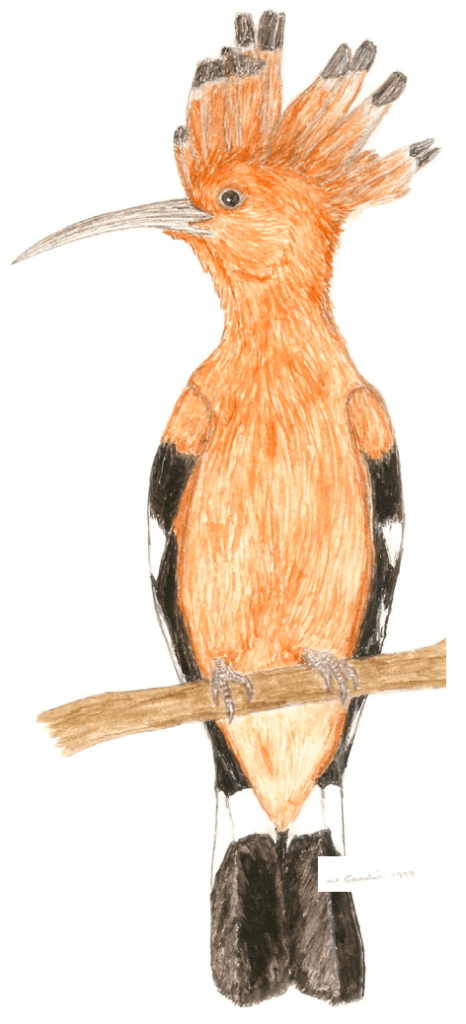
Hoopoe (Common)
Mhupupu; Chigubhubhu; Tuvo; Gugugu – Shona (all dialects)
inVekle; iMvunduna – Ndebele
Kukuku – Venda/Sotho
Pupupu; Marimamalanga – Shangaan/Tsonga
N’angaya bayuni – baTonga
Hoopoe (Green Wood-hoopoe)
Haya – Shona (all dialects)
iNhlekabafazi, uNukani – Ndebele
Kolokolwana; Yokoywana – Shangaan/Tsonga
http://www.biodiversityexplorer.info/birds/upupiformes.htm
Hornbill (Ground)
Dendera, Gahamadze, Dandila; Riti – Shona (all dialects)
iNsingizi – Ndebele
LeHututu; Hundundule – Venda/Sotho
Nghututu; Randaloa, Rhandzala – Shangaan/Tsonga
Momba – baTonga
http://www.biodiversityexplorer.info/birds/bucorvidae/bucorvus_leadbeateri.htm
Hornbill (Grey)
Goto; Hoto – Shona (all dialects)
Nkorho – Shangaan/Tsonga
Pilliyo – baTonga
Hornbill (Southern Yellow-billed/Red-billed)
Goto; Hoto; HotoMuthlawe; Kakamira – Shona (all dialects)
uKoro – Ndebele
Kgoropo; Ngoto – Venda/Sotho
Nkorho; Manteveni – Shangaan/Tsonga
Bangwa; Gotobusi – baTonga
Hornbill (Trumpeter)
Gakamira, Gangambudzi – Shona (all dialects)
iFlakaka – Nambya
Nkorho; Hakamila – Shangaan/Tsonga
Pongopongo – baTonga
http://www.biodiversityexplorer.info/birds/bucerotidae/index.htm

Additional References:
Cooke, P. (1970). Ndebele Bird Names. NADA, vol.10 (2): 67-68.
Maclean, GL. (1985). Roberts’ Birds of Southern Africa (5th ed.). John Voelcker Bird Book Fund, Cape Town, South Africa.
In the next post I will move on to bird names beginning with the letters ‘I to K’.
 Birdlore