Zimbabwean Bird Names (Wagtails – White-eyes)

Below are the first of the Zimbabwean names for birds corresponding with those that begin with the letter ‘W’ in the English vernacular. These local bird names were obtained from personal communication with contributors, as well as reference to lists contained in Cooke (1970) and Maclean (1985). These are not exhaustive and may be subject to minor errors.

Links to further information pertaining to each group or taxa are included.

Wagtails (Generic)
umVemve  – Ndebele
Moletašaka – Venda/Sotho
Mandzedzerekundze; Matsherhani; N’wapesupesu – Shangaan/Tsonga

http://www.biodiversityexplorer.info/birds/motacillidae/motacilla.htm

Warblers (Generic)
Timba; Dimba – Shona (all dialects)
Mandlakeni; Quovo – Shangaan/Tsonga
Kandenlya – Nambya

http://www.biodiversityexplorer.info/birds/sylviidae

Waxbills (Generic)
Kasisi – Shona (all dialects)
iNtakana; iNtinti; uGcigciane – Ndebele
Xindzingiri – Shangaan/Tsonga
Katiti – baTonga

http://www.biodiversityexplorer.info/birds/estrildidae

Weavers (Generic)
Jesa; Tserenga; Mugoubhani – Shona (all dialects)
inThaka; iHlokohloko; umUndumo (flock) – Ndebele
Thaga – Venda/Sotho
Sowa; Ndzheyana – Shangaan/Tsonga
Incho – Nambya
Manchoo – baTonga

Weaver (Red-headed)
isiGwe – Ndebele
Ndzheyana ya nhloko ya ka phsuku – Shangaan/Tsonga

Weaver (Red-billed Buffalo)
uMayadi – Ndebele
Malanga-bhuwa – Venda/Sotho
Xighonyombha – Shangaan/Tsonga
Syobobo – baTonga

http://www.biodiversityexplorer.info/birds/ploceidae

White-eyes (Generic)
Katiwarameso – Shona (all dialects)
Manqiti  – Shangaan/Tsonga

http://www.biodiversityexplorer.info/birds/zosteropidae

Additional References:

Cooke, P. (1970). Ndebele Bird Names. NADA, vol.10 (2): 67-68.

Maclean, GL. (1985). Roberts’ Birds of Southern Africa (5th ed.). John Voelcker Bird Book Fund, Cape Town, South Africa.

In the final post on bird names I will conclude with those remaining that begin with the letter ‘W’.
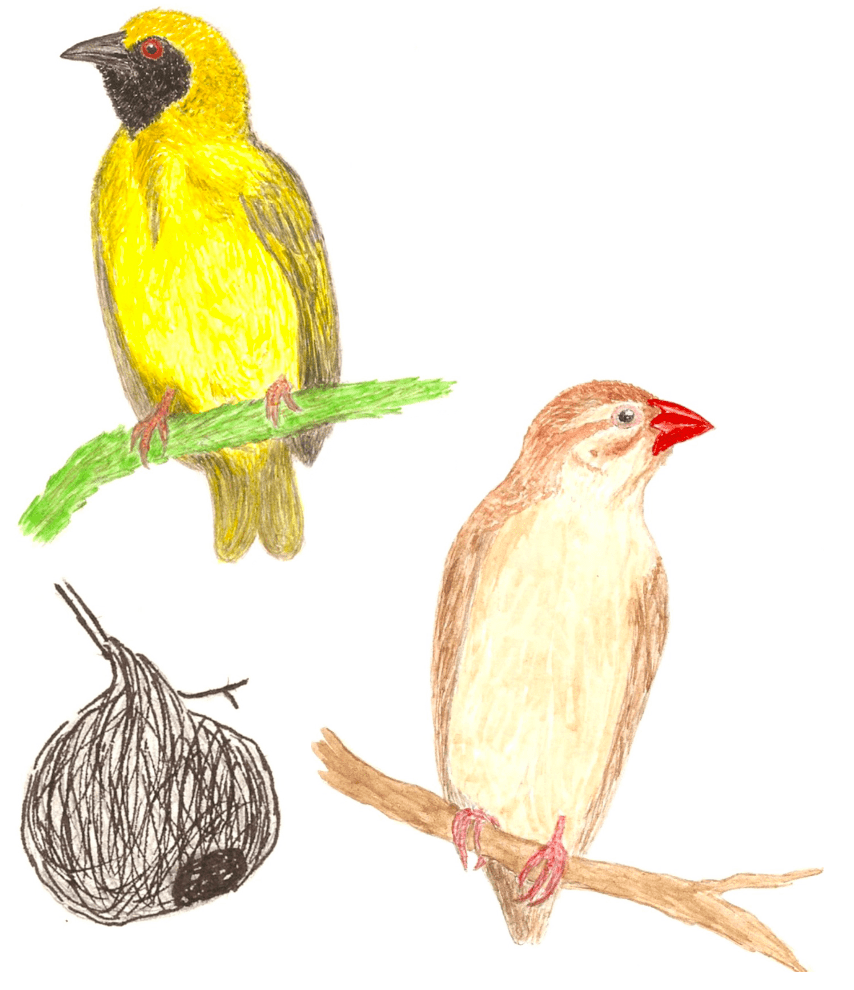
Bishops, Weavers and Quelea in Zimbabwean Folklore

The gregarious nature, colours, and nest-building prowess of the bishops, weavers and quelea have attracted the particular attention of Ndebele and Kalanga tribespeople. Indeed, it is commonly believed to be a good omen if any of the weaver species choose to build their basket-like nests in colonies nearby or above a homestead or kraal. This occurrence is said to be a sign of enduring peace and unity to the home, however none of these nests should be disturbed, as this would almost certainly result in future discord.

It is also believed that these birds possess the ability to predict good rains, and should any of the taxa mentioned build a large number of nests in a single locality, an excellent rainy season will follow. In addition, floods should be expected if a number of weaver nests are located exceptionally high up in a tree above a river.

While the Ndebele do not generally differentiate between the bishops, quelea and weavers (grouping all as iNthaka), in some areas they do have specific names for some weaver taxa. The Shona and some smaller tribes do qualify quelea and bishops as distinct from the weavers and the baTonga alone name the male and female (along with non-breeding males) separately. Flocks of quelea are however named only as a large single entity by the Ndebele, who believe that n’angas purposefully employ sparrowhawks to disperse these large flocks (umDumanyoni), which may otherwise decimate grain crops and result in a poor harvest.

Local names for weavers in Zimbabwe:

Jesa, Muguobhani – Shona (all dialects)
iNthaka – Ndebele
Manchoo – baTonga

Local names for quelea and/or bishops in Zimbabwe:

Nyamafuro (bishop), Ngoza, Chimokoto (quelea) – Shona (all dialects)
Chifada (bishop), Kandonga (quelea) – Nambya
Tingozi (quelea) – Shangaan
(bishop male) Chamsankanana / (bishop female) Tuyonimbile – baTonga
umUndumo, umDumanyoni (quelea flock) – Ndebele

A Southern Masked Weaver Ploceus velatus breeding male, is pictured below left with typical nest and a Red-billed Quelea quelea non-breeding male (or female) is pictured below right.

Information for this section was obtained only from contributors.

For more information on the species depicted visit:

https://ebird.org/species/afmwea/

http://datazone.birdlife.org/species/factsheet/8522

https://ebird.org/species/rebque1/

http://datazone.birdlife.org/species/factsheet/red-billed-quelea-quelea-quelea