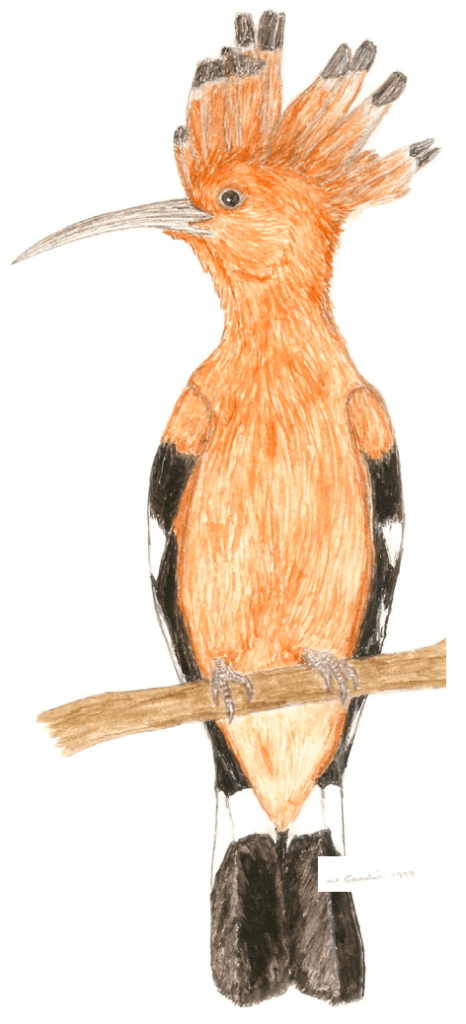
The Common Hoopoe Upupa epops (pictured) is an unusual bird with orange, black and white colouration, long crest and a curved bill used to probe the ground in search of grubs and insects. In Southern Africa, it breeds from August to December in a suitable nest hole and calls frequently during this period, which also roughly coincides with the rainy season. People of Ndebele origin thus believe that this species calls for the rain and it is therefore seldom harmed.
The baTonga and Nambya believe that this hoopoe is a particularly important messenger, closely associated with spirit mediums and that if a dead bird is found it is a sure sign of unease amongst the spirits and a harbinger of impending bad luck.
The sociable Green Woodhoopoe Phoeniculus purpureus is also associated with the spirit mediums, largely due to their raucous ‘cackling’ communication calls. This is reflected in their Ndebele name iNhlekabafazi or ‘laughing women’.
Local names for the Common Hoopoe in Zimbabwe: Mhupupu, Chigubhubhu, Tuvo, Gugugu – Shona (all dialects) inVekle, iMvunduna – Ndebele Pupupu, Marimamalanga – Shangaan iN’angaya bayuni – baTonga/Nambya
Local names for the Green Woodhoopoe in Zimbabwe: Haya – Shona (all dialects) iNhlekabafazi, uNukani –Ndebele Kolokolwana – Shangaan
Information for this section was obtained only from interviews with contributors.
Common Hoopoes have widely been regarded as a bird of powerful medicine, associated with general virtue, particularly in the Arab world. In ancient Egypt their blood was applied to the eyes to inspire visions and these birds were offered for sale in modern Egyptian markets as late as the 1980’s as a good luck charm. They also continue to be used for various magico-medicinal purposes by the Hausa people of West Africa.
Additional Reference:
Cocker, M & Tipling, D. (2013). Birds and People, Jonathan Cape, London, England.
For more information on the species mentioned here visit:
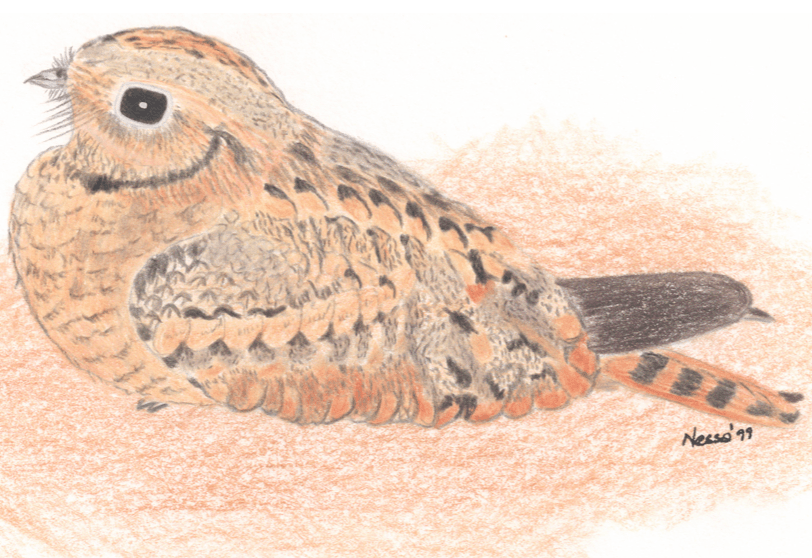
Nightjars are nocturnal insectivores that make use of their large gape to capture prey whilst on the wing. Of the six species that occur in Zimbabwe, most undertake some degree of seasonal or regional movement and are often encountered during the day when disturbed from ground roosts or nests where cryptic colouration prevents detection until they reluctantly take flight. The Mozambique Nightjar Caprimulgus fossii is pictured in a typical pose.
The increased frequency of calling becomes distinctly more noticeable prior to breeding during the wet season, and for this reason many Ndebele people believe that these birds herald the rainfall. However, due to their nocturnal aerial foraging and unobtrusive habits many also treat nightjars with suspicion and it is widely considered to be a bad omen should one of these birds settle on the ground near a homestead or village.
During interviews, people of Shangaan, Ndau and Venda origin related a common local belief that nightjars are particularly unintelligent. A person who continually makes mistakes is thus likened to one of these birds. Traditional practitioners are also said to make a powder from the ashes or eggs for a husband to mix in with the food of a ‘troublesome’ wife in order to make her ‘stupid’ and ensure her obedience.
Local names for nightjars in Zimbabwe: Ndahwa, Dabgwa, Datiwa – Shona (all dialects) iDahwa – Ndebele Liwubawuba – Venda/Sotho Libwatsani, Ribyatsani, Riwuvawuva – Shangaan Lukumba – baTonga
Information for this section was obtained only from original interviews.
Additional reference to other sources for the rest of Africa revealed only a common Kenyan belief that bad luck will befall anyone who kills one of these birds or disturbs the eggs.
Additional Reference:
Cocker, M & Tipling, D. (2013). Birds and People, Jonathan Cape, London, England.
For more information on the species mentioned here visit:
Due to their largely nocturnal habits, silent flight and large eyes, owls are traditionally regarded with a high level of suspicion by most Zimbabwean people.
These birds are generally associated with witchcraft and are believed to be familiars of witches and evil spirits who operate under the shadow of darkness. Although the twelve resident species vary considerably is size and habits, all are commonly regarded as harbingers of death or misfortune to some degree. Indeed, I found that this belief may be so entrenched that some people appeared decidedly uncomfortable or even evaded questioning on the subject of owls.
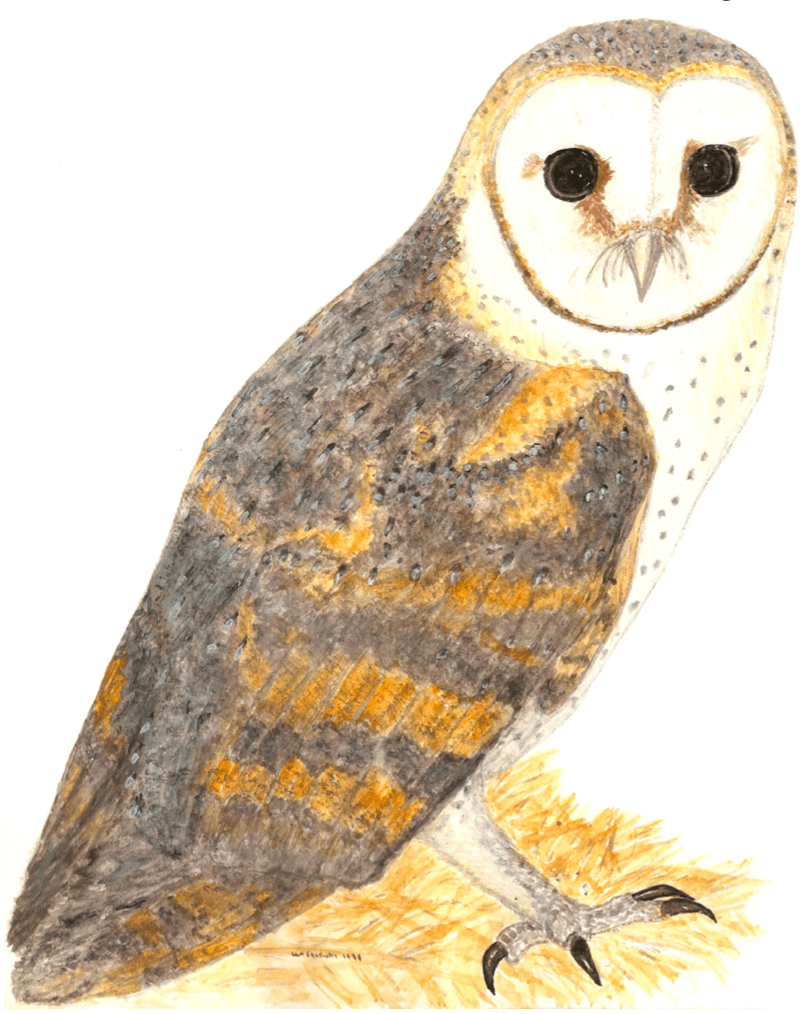
I was able to ascertain that the lower pitched hooting call of the Spotted Eagle-owl Bubo africanus or deep ‘grunt’ of a Verreaux’s Eagle-owl Bubo lacteus instills a deeper feeling of dread than the shrill screech of a Barn Owl Tyto alba (pictured) or the whistling call of the small (and partly diurnal) Pearl-spotted Owlet Glaucidium perlatum. Indeed, the persistent duetting of a pair of Spotted Eagle-owls near a homestead or village has even been known to cause residents to abandon their dwellings. Should an owl call from a perch on a roof, this is considered to be a particularly bad omen, possibly predicting the death of a family member of the occupant. In some instances the possibility of occurrence is prevented by placement of a spike on the apex of a hut, making it impossible for an owl to perch in that location.
It is also believed that should a Verreaux’s Eagle-owl swoop down and strike a traveller on the back of the head, that person may be doomed or will find a relative or friend dead or dying on their arrival home with no possible hope of reprieve. (This belief may have some basis in the fact that these owls may attack any intruder that ventures too close to a nest site).
The eyes of owls are used by some n’angas to make a concoction believed to heal failing eyesight. They may also be used in defensive spells, and for this reason the remains of these birds may occasionally be offered for sale in traditional markets, along with their eggs.
The general fear of owls persists, even in urban areas where they are unfortunately often persecuted by stoning.
Local names for the Verreaux’s Eagle-owl in Zimbabwe:
Information for this section on owls was obtained from contributors as well as Bozongwana (1983).
Reference:
Bozongwana, W. (1983). Ndebele religion and customs (1st ed.). Mambo Press, Gweru, Zimbabwe.
Similar beliefs to those discussed are shared throughout Africa, however some people do recognise owls as beneficial due to their effective control of agricultural pests. Their body parts are also widely used as a foundation for defensive spells, the heart being considered as particularly potent in Cameroon. The feathers may also sometimes be worn as a protecting amulet against witches that have assumed owl form, or owl familiars acting at their behest.
Additional References:
Cocker, M & Tipling, D. (2013). Birds and People, Jonathan Cape, London, England.
Mikkola, H. (2021). Owl Knowledge and Beliefs in Africa, Tyto : 9-33.
For more information on the species mentioned here visit:
Due to its unusual habits and relatively strange appearance, the stork-like Hamerkop (Scopus umbretta) has become the subject of many taboos, making it one of the more eminent species, a fact which has almost certainly contributed to the ongoing protection of this species in the rural areas of Zimbabwe.
Hamerkops frequent suitable freshwater habitats, with a preference for quiet sections of rivers and streams where they often remain motionless for long periods, resting or scanning the water for frogs, tadpoles, and other aquatic prey, a habit which has led to the prominent common local belief that they are ‘vain’ birds that need only one eye with which to admire their own reflection.
These birds construct a particularly large stick and reed nest, normally situated in the fork of a tree or atop a boulder, often on a secluded riverbank. Construction may take many months and nests often contain unusual ‘bits and pieces’ such as bicycle tyres, plastic toys, string, rags, wire, building hardware, piping, tin foil, shoes and clothing, as well as bones and large feathers, all incorporated into the fabric. This habit of collecting various personal and household items is likened to the practice of a sorcerer gathering such items in order to cast a controlling spell, or for other nefarious purposes. This fact has not escaped the attention of local people, and during discussions I discovered that these items are indeed much sought after by traditional practitioners who may sometimes even destroy the nest to retrieve them. The hollow structure includes a single nesting chamber with only one downward facing entrance and are plastered internally with mud. However, despite this, it is commonly believed that these birds actually construct two chambers, with the additional one serving as a storehouse for bones, while multiple entrances enable a rapid escape, making the birds particularly difficult to catch. A person who is adept at evading others is thus likened to the Hamerkop.
I also recorded the Zezuru belief that, should a person place nesting material on the roof of a hut, a Hamerkop will soon discover it and proceed to strip the thatch. A person who collects and hoards ‘junk’ is likened to these birds. Another belief is that the act of nest disturbance may lead to madness and cause an ordinary person to become disoriented, following the bird on its wanderings. Anyone guilty of killing one of these birds would suffer a similar fate. In addition, the fact that other animals associated with the occult, such as snakes, may inhabit abandoned nests seems to have reinforced the belief that bad luck will befall anyone who dares interfere with the nest or birds.
As Hamerkops form a socially monogamous pair, the bones are sometimes used by Shona n’angas to form a potion to encourage fidelity in the husband of a female client, while Nambya people interviewed related that that a concoction made from this bird’s eggs will enable the recipient to become invisible.
Another common belief is that should one of these birds fly across your path, any travel plans for the day should be abandoned. However should one fly parallel to the intended route, this would indicate a safe journey ahead. A Hamerkop in flight over a homestead is said to signify a particularly bad omen, especially when calling, perhaps heralding the death of a close relative.
I found it surprising that despite the continued prominence of this unusual bird in contemporary folklore only one depiction of this bird is known in local San rock-art.
Broadly similar beliefs are shared throughout much of southern and Africa, with some slight variation within the basic common themes already mentioned. However, it appears that this trend is less uniform across the rest of the continent. With additional reference to the book Birds and People, I have attempted below to summarise some of these variations, along with other information that I did not encounter during Zimbabwean interviews.
A saying of the Lungu people of south-west Tanzania is that this species ‘builds a house but does not sleep in it’. This is in possible reference to their propensity for nest abandonment, even after a lengthy nest-building period. It is believed that the nest must pass a ‘test’ which involves a successful ‘first pass’ entrance at high speed. Upon failure, the nest is abandoned and another attempt must be made elsewhere.
Other prevalent beliefs from the Eastern Cape (South Africa) relate to the Hamerkop’s perceived role in heralding rainfall, possibly associated with active nest building in the period leading up to breeding in the rainy season. Indeed, in this same area a bird was found sacrificially killed and hung upside-down in a tree in order to appease the spirits for the procurement of rain during a period of drought. An association with lightning is also made both in the Eastern Cape and in northern Botswana, where the disturbance of a nest or bird would result in lightning strike on the perpetrator’s dwelling, directed by the calling or mere presence of one of these birds. It is interesting that I noted a broadly similar mixture of beliefs regarding either rainfall or lightning when dealing with other important species such as the Ground Hornbill, Bateleur Eagle, storks, and flamingos, which will be covered in future posts.
In some areas of Zambia, there appears to be little regard for this species, while the Mbeere of Kenya regard these birds as foolish and lazy and do not eat them simply due to their ‘unclean’ diet of frogs and tadpoles. However, at least amongst some of the neighbouring Kikuyu, these birds are still believed to be linked to sourcery.
Additional Reference:
Cocker, M & Tipling, D. (2013). Birds and People, Jonathan Cape, London, England.


 Birdlore